
Home / Services
Addiction treatment services in Kota Kinabalu
A safe, supportive place to recover from all kinds of addiction — with care before, during and after.
What can we do for you?

Residential treatment
A 28-day live‑in programme of therapy, groups and coaching.

Outpatient & aftercare
Sessions while living at home, and support after a programme ends.

Family support
Counselling and education for the family, because addiction affects everyone at home.
Back to work
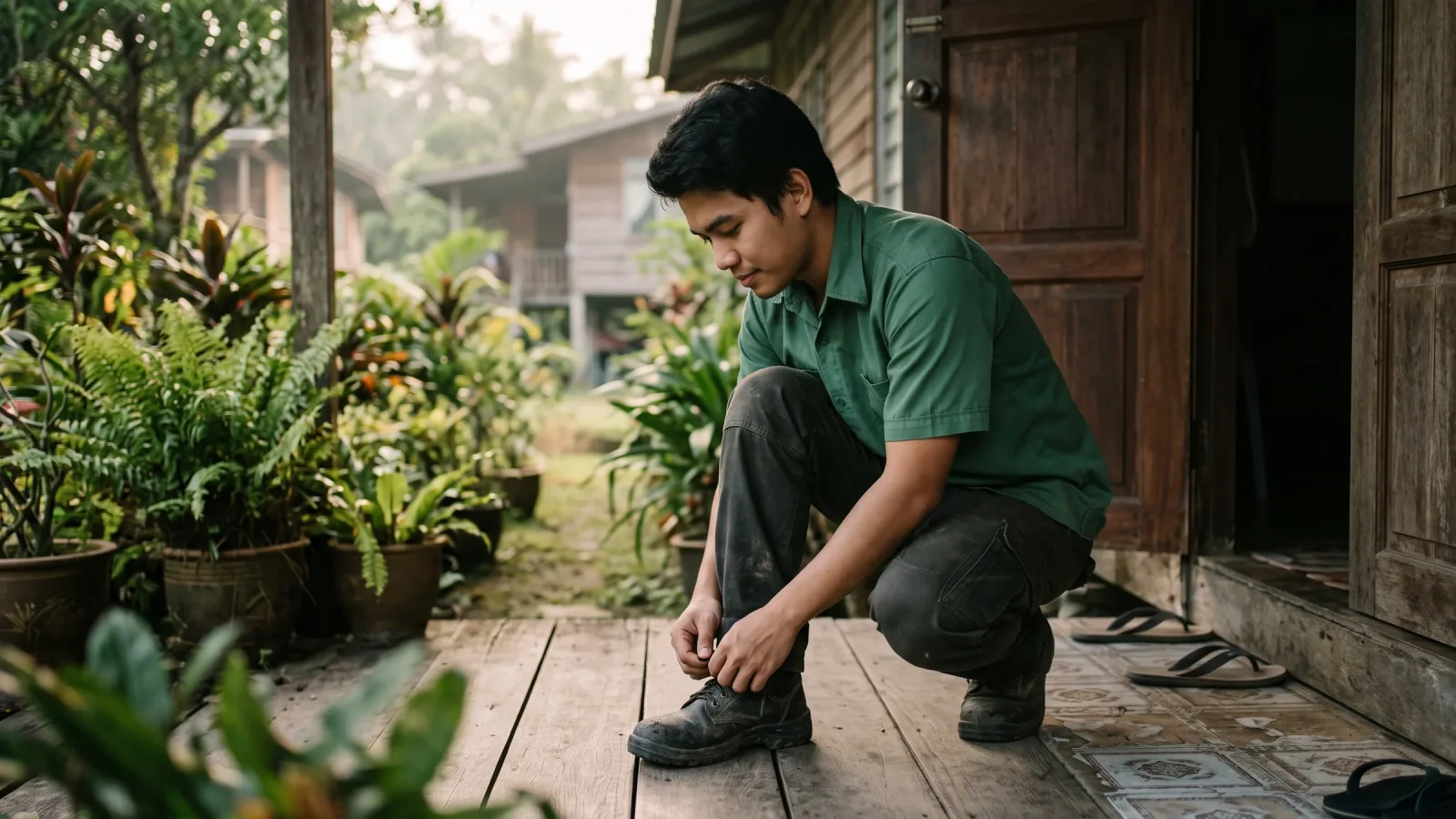
Job skills, an employment plan and help returning to daily life.

Crisis intervention
Help when things come to a head, and someone to manage the next steps.
Our process
How does treatment work?
Five stages, from the first message to life back at work and at home.

Screening & assessment
Severity of addiction, mental health, physical health, willingness and readiness.
Admission
Medical check-up, orientation, counselling.
Issues & treatment goals
Clinical assessment, problems list, goals list, support list.
Treatment & coaching
Psychoeducation, family psychoeducation, self-care life skills, 12 Steps groups, individual counselling and coaching, relapse prevention.
Back to work & daily life
Secondary programme, job skills workshop, employment action plan, referrals and advocacy, aftercare programmes, job development.
How do we track progress?
We use the Transtheoretical model of behaviour change. Progress is measured by which stage of change a person is in, and our programmes are built on the Biopsychosocial model to help people move through each stage.

1. Precontemplation
Definition: Not yet considering change or is unwilling or unable to change.
Primary task: Raising Awareness
2. Contemplation
Definition: Sees the possibility of change but is ambivalent and uncertain.
Primary task: Resolving ambivalence / Helping to choose change
3. Determination
Definition: Committed to changing. Still considering what to do.
Primary task: Help identify appropriate change strategies
4. Action
Definition: Taking steps toward change but hasn't stabilized in the process.
Primary task: Help implement change strategies and learn to eliminate potential relapses
5. Maintenance
Definition: Has achieved the goals and is working to maintain change.
Primary task: Develop new skills for maintaining recovery
6. Recurrence
Definition: Experienced a recurrence of the symptoms.
Primary task: Cope with consequences and determine what to do next
What do clients learn in group sessions?
Group education builds understanding and gives people practical tools against addiction. Examples of our modules:
- The Addiction Tree
- Triggers
- Introduction to the 12 Steps
- Urge Surfing
- Understanding Substance Abuse & Behavioural Addiction
- Anger Management
- Masks We Wear
- Boundaries
- Relapse Prevention
- Importance of Gratitude in Recovery
- Powerlessness & Unmanageability
- H.A.L.T. (Hungry, Angry, Lonely, Tired)
- The Relapse Cycle
- Stinking Thinking
- Drama/Empowerment Triangle